Showing posts with label consciousness. Show all posts

Thursday, December 19, 2024

Sleep: Three quotes

person with electrodes stuck to head

It's a purposeful irony of life, I suppose, that we never get to see ourselves in that state. We can only pay witness to our waking reflection, which to one degree or another is always fretting or afraid. Maybe that's why young parents find it so beguiling to spy on their children when they're fast asleep.

— Amor Towles. Rules of Civility (2011). New York: Penguin Books, 2012.


Spending evenings in front of a glowing computer, TV, or cellphone screen can put you at risk of depression, Science News reports. Nighttime exposure to light from gadgets has already been shown to contribute to insomnia, cancer, obesity, and diabetes. Now, a new study shows that screen glow can cause mood-related changes in the brain. For weeks, researchers exposed hamsters to eight hours a night of dim light — like that from a TV screen — instead of their usual eight hours of pitch darkness. They found that the rodents became lethargic and ignored their favorite sugary treats, suggesting that they weren't deriving "pleasure out of activities they once enjoyed" — a major indication of depression in humans, says study author Tracy Bedrosian. The rodents' brains also showed the same kinds of changes in the hippocampus that are common in depressed people. "The good news," Bedrosian says, is that the damage disappeared and the rodents' behavior returned to normal after researchers took the night lights away, meaning that simply powering down earlier may "undo some of the harmful effects" that late-night gadget users face. Over the past 50 years, depression rates in the U.S. have increased dramatically as artificial lighting at night has become more common.

— "Screen-viewing blues," The Week, August 10, 2012, p. 19.


As historian Robert Ekirch writes, sleeping for one uninterrupted interval is simply a function of artificial light and the industrial revolution. Before electricity and factories, segmented sleep — sleeping in two intervals — was all the rage. Benjamin Franklin was a fan: Between “first sleep” and “second sleep” he would get naked, throw open the windows and take cold air baths. The French called the period between the two sleeps “dorveille,” while the English called it “the watch.” Both terms sound ancient and spooky in a cool way, which made me search for other people who embrace this period of sleeplessness. On Medium, Ron Geraci describes this state as “an odd, placid form of being awake — more aware but less alert…a ripe sentience that allowed clear but limited thought and wanted stillness.”

* * *

...a shout out to the true sleep rebels, our beloved night owls. While they don’t necessarily have “two sleeps,” they do find themselves hyper-focused in the middle of the night. A self-described night owl, Stefanie Morejon, writes on Medium that her behavior is perhaps evolutionary, essential for human survival. “Somebody,” she writes, “had to stay awake to keep the fires burning, to protect the community and keep the night creatures at bay.”

— Adeline Dimond, "It’s not (always) insomnia, it’s segmented sleep," Medium Newsletter, December 19, 2024


Wednesday, April 12, 2023

On the ritual fire

The Roma,

“who have lived in Prague for only two generations, light a ritual fire wherever they work, a nomads’ fire crackling only for the joy of it, a blaze of rough-hewn wood like a child’s laugh, a symbol of the eternity that preceded human thought, a free fire, a gift from heaven, a living sign of the elements unnoticed by the world-weary pedestrian, a fire in the ditches of Prague warming the wanderer’s eye and soul.”

Bohumil Hrabal. Too Loud a Solitude (Příliš hlučná samota) 1976. Translated from the Czech by Michael Henry Heim. Abacus (Little, Brown Book Group), 1990. p. 42.

“In his 1967 article ‘Shamans and Acute Schizophrenia,’ a central source for the McKennas… Silverman then outlines a multi-phase model of pathologic experience that, up to a certain point, characterizes both schizophrenics and shamans. Drawing from the hero’s journey structure popularly articulated by Joseph Campbell, Silverman describes the earlier stages of this process as a descent into psychological chaos, a regressive state characterized by automatisms, archaic ideation, and encounters with transpersonal forces. This descent is then followed, most of the time, by a ‘cognitive reorganization.’ * * * Here [at the sealed Institute on the Big Sur coast] Silverman worked on one of Esalen’s main agendas: to rewrite insanity as an episodic process of psychic reorganization that follows the same death-and-rebirth model found, it was believed, in both esoteric initiations and deep psychedelic experience.”

Erik Davis. High Weirdness: Drugs, Esoterica, and Visionary Experience in the Seventies. London: Strange Attractor Press, 2019.

“Newness...is precisely the return from left-hemisphere familiarity to right-hemisphere familiarity, from inauthenticity to authenticity. It cannot be willed, though it might be much desired; it requires an (apparently passive) patient openness to whatever is, which allows us to see it as if for the very first time, and leads to what Heidegger called radical “astonishment” before the world. That concept is also related to Jan Patocka’s shakiness: a sort of elemental driving out of the complacency of our customary modes of seeing the world. … It involves reconnection with the world which familiarity had veiled. It is at the furthest remove from the need to shock: it requires looking more carefully at what seems only too familiar, and seeing it perhaps for the very first time.”

And, in a footnote:

"Jan Patocka (1907–77) was an important Czech phenomenological philosopher, active in the Charter 77 human rights movement. He spoke of the “solidarity of the shaken”, at one level an affirmation of the power and determination of those who have suffered political oppression, but at another a recognition of the resolve born of a different kind of suffering, in those for whom the comfortable familiarity of the apparently known no longer disguises the sheer “awe-full-ness” of Being — what Rudolf Otto called the mysterium tremendum et fascinans (Otto, 1923). Thus Andrew Shanks writes of “those who have been shaken, especially by the experience of great historic trauma, out of lie “within a lie” — or, in general, out of the unquestioned prejudices of their culture — into a genuinely open-minded thoughtfulness. This is not the thoughtfulness of scholarly expertise; but, rather, that other sort of thoughtfulness (to be found at all different levels of scholarly sophistication or articulacy) which may also be described as a fundamental openness to transcendence” (Shanks, 2000, p. 5)."

Iain McGilchrist. The Master and His Emissary: The Divided Brain and the Making of the Western World. New Haven and London: Yale University Press, 2009.

"Regret for the past is not the same as nostalgia. Pretending it is [the same] has always been the first and cheapest move of the present’s apologists. Regretting the past is...a way of steeling oneself for the fact that the past really is lost, and therefore maybe having a chance of looking the future accurately in the face."

— T. J. Clark, quoted on Twitter by Jared Marcel Pollen
https://twitter.com/JaredMPollen/status/1670417226489315331

"Time is like an eternal burning bush. Though each instant must vanish to open the way to the next one, time itself is not consumed."

— Abraham Joshua Heschel. The Sabbath (1951). Prologue. Reprint: New York: Farrar, Straus and Giroux, 2005.


You might like

Bad Fire

a memoir by Tucker Lieberman

electric colors spiritual statue

Image: Bertel Thorvaldsen's sculpture of Christ. Copenhagen Cathedral. Image by Gunnar Bach Pedersen © public domain Wikimedia Commons.

Read: Cómo La Clase Liberal Se Apropió Del Trauma. Entrevista A Catherine Liu x The Institute Of Arts And Ideas, ECSND, Jul 13, 2026

Sunday, June 5, 2022

Passion, detachment, death-drive, ghosts, equilibrium, old-growth, escape

Quotes I'd like to share with you. Sources at bottom.

From Living Alone and Loving It:

"Passionate interests have the potential to cross-pollinate. Years ago I met a woman who was fascinated by the history of bread. 'If you study bread,' she told me, 'eventually you learn everything about the society that made it; who tilled the fields, who harvested the grain, the artists who created the utensils and the art that adorns them, the status of women, farmers and merchants, even their economy.' It seems that if you pick up the thread of almost any interest and are eager to follow it, it can weave together the whole world!

From The Four-Dimensional Human:

“Bartleby, the copyist who refuses to copy...

* * *

The grotesquely static Bartleby, spending hours in trance-like states, embodies the petrifying qualities of authoritarian power structures that uphold corporate architecture. His employer tries to indulge Bartleby’s refusal, and encourages him to take ‘wholesome exercise in the open air. This, however, he did not do.’ ... Bartleby is ultimately arrested and removed for being a vagrant...His employer recognizes the lunacy of this charge: ‘It is because he will not be a vagrant, then, that you seek to count him as a vagrant.’ ... Bartleby, as the static-vagrant, is a monstrous impossibility. ... The clerk spends hours entranced by the view out of his window, which is the unchanging non-view of a wall, the essence of failed refreshment. ... caught in a cycle of reproducing that which already exists. Being absorbed into this strange form of static work, motion without progress..."

From “Pride Reimagined":

"In his 2005 book, In a Queer Time and Place, J. Jack Halberstam writes that queer cultures produce 'alternative temporalities,' or 'queer time,' by allowing us to imagine futures for ourselves outside birth, marriage, reproduction and death, those 'paradigmatic markers of life experience.'"

From Monster Portraits:

“‘A zone of incandescence.’ Aimé Césaire, from a 1943 essay in which he writes that in order to maintain poetry, one must ‘defend oneself from social concerns by creating a zone of incandescence.’ Quoted in A. James Arnold’s introduction to The Original 1939 Notebook of a Return to the Native Land, Wesleyan University Press, 2013, p. xvii.”

From Peripatet:

"It pulls apart the suicide and makes it personal, every feeling felt, every nuance placed simply before your eyes in enticing imagery that humanizes the experience and thus perhaps terrifies you. Intimate with suicide, this is the result. You become intimate with someone choosing death over life because you understand what might lead one to think this way. You understand the pills, the cabinets full of. You understand the arguments, the evenings full of. You understand the family’s concern, the life apparently full of nothing else. You feel nauseated with identification, perhaps. It’s a downer, a terrible thing, you’re a negative creep."

From "High Falls: A Human Chain":

"Problematically, suicide also works to backfill a biography so that every action in a person’s life seems pointed towards a tragic endpoint, which of course is grossly deterministic. 'Only the living seem incoherent,' continues Critchley, with irony. 'Death closes the series of events that constitutes their lives. So we resign ourselves to finding a meaning for them. To refuse them this would amount to accepting that a life, and thus life itself, is absurd.'"

From "The Light Moves and Changes Everything":

“The afterlife would be dreadful if we were aware of being forgotten, and most of us will inevitably be forgotten, as soon as within a couple generations. While alive, we are mostly surrounded by the recognition of others, even if that recognition consists of being avoided on a subway car or chased from a homeless encampment by a police officer. But profound oblivion awaits, much to the dismay of those who work tirelessly to impress themselves in the collective consciousness of the internet. The awareness of this irrelevance is what being a ghost is all about: understanding the self as dandruff, flyspeck, dryer lint, a single particulate of exhaust soot on a blade of drought-resistant grass along the median strip of an interstate. The body decays ignominiously, so we invent the spirit and glorify that instead, testifying to the mystic self as a wilful, independent force – but the spirit is as disposable as a wisdom tooth, and the presence or idea of ghosts reminds us of this.

Ghosts in their liminal fix also populate a formal panel rejecting the dichotomous valorisation or damnation of the Abrahamic human spirit: neither the perpetual orgasm of rapturous, heavenly bliss nor a hell of physical pain administered with close attention by demons – rather, an insular bureaucracy without meaningful interactions aside from the occasional grievance that can never be communicated adequately beyond a shriek, a stuck piano key, a slammed door, or a cracked mirror, more often driving away those propitiated or appealed to (the living occupants who still have faith in tidy endings) than resolving any intractable problem left over from the spectre’s ephemeral life.”

From "Finding Satisfaction, Knowing When to Stop":

The Old Master uses the sinograph “unhewn, primitive piece of wood” (pǔ 樸) to represent the pristine wilderness and unadorned simplicity of nature, untouched by humans.

* * *

Like the Dào, pǔ is ubiquitous and ineffable. But as we evolved into bipedal creatures, we began to use our hands to shape pǔ into artifacts or tools (qì 器)4. There is a zero sum game between pǔ and qì. For thousands of years, indigenous cultures managed to preserve an abundant pǔ, until they too were decimated along with the pǔ.

As we create more qì, more pǔ is destroyed forever. Once we have obliterated enough pǔ to tip the critical equilibrium, we have also brought our survival into question. I am afraid we may be at just such a junction, perhaps we have even exceeded it.

* * *

Civilization was able to maintain a reasonable amount of pǔ until the dawn of the Industrial Revolution. But since then, we have so thoroughly destroyed pǔ, we can no longer restore it. The best we can do is to stop our mindless destruction and let trees, billions of them, rescue us."

From The Sabbath:

"...it is the world of space which is rolling through the infinite expanse of time."

From The Last American Road Trip:

"We went to Branson because it's a short drive from Route 66 in Springfield, where we had watched the sun rise over the World's Largest Fork, hailing the dawn's early light gleaming from its tines like lasers.

There is nothing that does not belong on Route 66 because there is nowhere Route 66 belongs — not anymore. Route 66 beckons you to the freedom of the open road, but the open road keeps terminating without warning.

Route 66 displays the World's Biggest Objects and invites you to solve the World's Greatest Mysteries from faded billboards on dead-end streets. Route 66 is neon lights that burned out before your grandma was born and motels boasting signed photos of celebrities your children can't name. Route 66 makes you nostalgic for experiences you never had in places you never saw with people you never met. Route 66 is America's mental breakdown lane, a postcard from your subconscious marked return to sender.

Route 66 is America, and America is falling apart.

When it was completed in 1926, Route 66 was to roads what the Mississippi is to rivers: the big one, the highway of the American Dream. Constructed when cars were new, it symbolized an American longing for freedom modeled as a roadway to escape. Escape was the fantasy of the postwar 1920s like impunity is the fantasy of the permanent-crisis 2020s. In teh twenty-first century, a fragile ideal of freedom based on hope became a cruel vision of freedom based on power. Freedom based on hope lets you coast on illusion. But impunity, the sadist's view of freedom, gets off on stealing even that.

* * *

Americans drove Route 66 believing you could reinvent yourself at the other side: escape the law, escape society, escape yourself. ... I keep chasing it, the road and the dream, because I am its target audience, the American fool."


Sources

Barbara Feldon. Living Alone and Loving It: A Guide to Relishing the Single Life. New York: Fireside, 2003. p. 60.

Laurence Scott. The Four-Dimensional Human: Ways of Being in the Digital World. New York: W. W. Norton, 2016. “Chapter 6: The Cabin in the Woods.”

Thomas Page McBee. "Pride Reimagined." New York Times. June 16, 2020.

“Notes.” Del Samatar and Sofia Samatar. Monster Portraits. Brookline, Mass.: Rose Metal Press, 2018.

Grant Maierhofer. Peripatet. Inside the Castle, 2019. p. 426 of PDF.

“High Falls: A Human Chain.” Robert W. Fieseler. Delacorte Review. June 28, 2019. Accessed May 21, 2020.

"The Light Moves and Changes Everything; or, the Quantum Mechanics of Memory in the Afterlife." Teresa K. Miller and Gregory Giles. Berfrois. January 28, 2020. Accessed April 26, 2020.

"Finding Satisfaction, Knowing When to Stop." Yoo-Chong Wong. Sisyphus. February 2020.

Abraham Joshua Heschel. The Sabbath (1951). Prologue. Reprint: New York: Farrar, Straus and Giroux, 2005. Epilogue.

Sarah Kendzior, The Last American Road Trip, 2025. Chapter 3.


These passages remind me of the work I did for Ten Past Noon. If I'd known about them earlier, I would have worked them into my book.

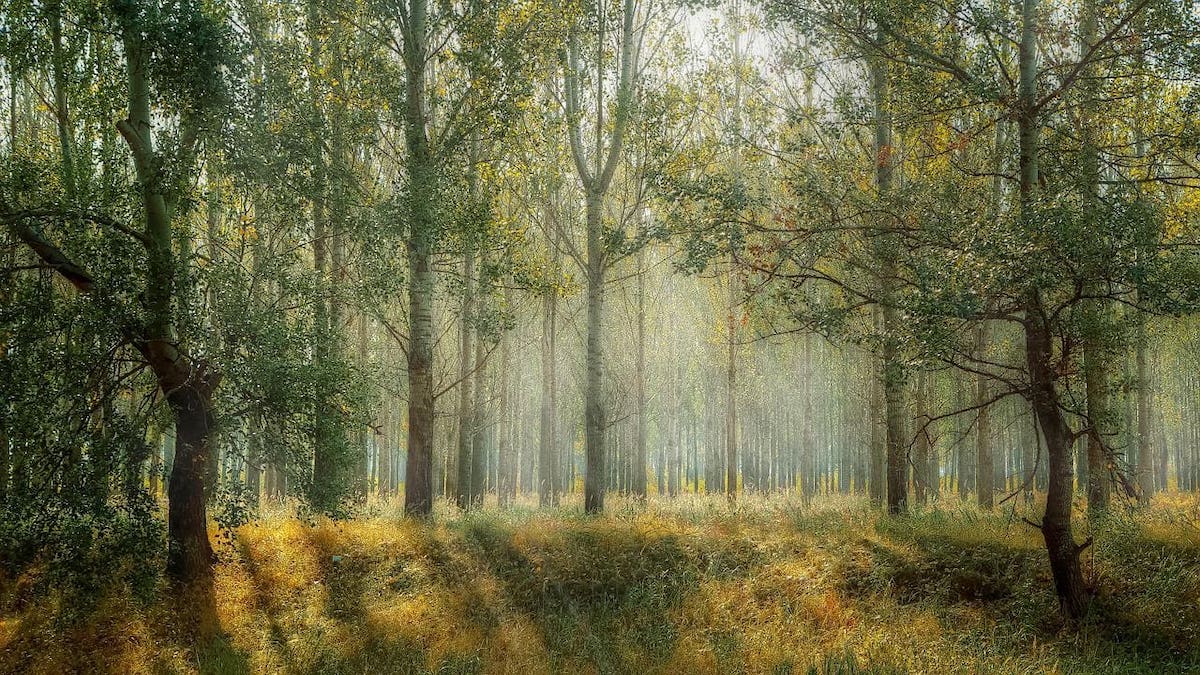
forest in daytime
Forest by Valiphotos from Pixabay

Monday, October 12, 2020

Do we perceive things as they are, or as we are?

Reviewing some passages I transcribed 10–20 years ago on this subject.

One possible worldview is: The external world exists as exactly-whatever-it-is, and we perceive it and interpret it.

"Here is the argument. Outside our heads there is freestanding reality. Only madmen and a scattering of constructivist philosophers doubt its existence. Inside our heads is a reconstitution of reality based on sensory input and the self-assembly of concepts."
— Edward O. Wilson, Consilience

"Consciousness, by which I think [he]...means apprehension, is a state of a mind, and does not include its object (say, a body) as a part of itself."
— W. D. Ross. The Right and the Good. (1930) London: Oxford University, 1946. p. 71.

This arises in distinctions like "ontological" or "metaphysical" (what exists) against "epistemological" (what we know).

"These are the four elements present in awareness: metaphysical, epistemological, mystical, and moral dimensions — four ways of revealing, or "translating," the mystery of the Divine and applying it to our human condition. First, the metaphysical, as grounded in the transcendent One, is limitless vertical truth. The epistemological, or what we can know, is moment by moment a horizontal reality pointing to its vertical Source. The mystical, from the horizontal into the boundless, is the spacious verticality of the Divine. Finally, the moral combines transcendent vertical awareness with the horizontal — appropriate attitudes and actions in everyday life. In its spiritual expression, developing from its moral character, awareness is love in action, and the attributes of limitless sensitivity, kindness, compassion and mercy — actual acts of living.
Wayne Teasdale. A Monk in the World: Cultivating a Spiritual Life. Novato, Calif.: New World Library, 2002. pp. 198-199.

"She spoke about that common problem of journalism, 'parachuting in.' A reporter from the big city drops into a small town to collect color at the local diner. Why, I'd done it in Rifle. The opposite of such a practice is immersion, rooting yourself in one place, one story, for a duration. Parachuting, immersion — these are metaphors of the vertical. I was on the horizontal, cutting a line. Not an immersion, a cross-section. An incision. Draw a scalpel across the country, see if it bleeds."
Jeff Sharlet. The Undertow: Scenes From a Slow Civil War. W. W. Norton & Co., 2023. p. 236.

Or:

"“Vertical morality teaches that authority, power and a moral code of right and wrong, or acceptable and unacceptable, come from ‘above’ ― an external superior who designates rules, systems and tenets that must be obeyed by those beneath,” said Tia Levings, a former Christian fundamentalist and author of “A Well-Trained Wife: My Escape from Christian Patriarchy.”

In the context of religion, the superior is God. In politics, it might be an authoritarian dictator. In a cult, it would be the controlling leader. Whatever the circumstances, the idea is that behaviors are only right or wrong based on what the figure in power says." (Caroline Bologna, HuffPost, Oct 6, 2025)

Or: Facts need to be supported, not only because we need to justify why we believe them, but because the facts themselves depend on that support.

"In a series of controversial books in the 1970s and 1980s, he [Bruno Latour] argued that scientific facts should instead be seen as a product of scientific inquiry. Facts, Latour said, were “networked”; they stood or fell not on the strength of their inherent veracity but on the strength of the institutions and practices that produced them and made them intelligible. If this network broke down, the facts would go with them.

Still, Latour had never seen himself as doing anything so radical, or absurd, as calling into question the existence of reality."

Ava Kofman. "Bruno Latour, the Post-Truth Philosopher, Mounts a Defense of Science." New York Times. October 25, 2018.

Or, everything is nothing specific:

"To explain the notion of primordial essence in Chabad metaphysics, he [Elliot Wolfson, in Open Secret: Postmessianic Messianism and the Mystical Revision of Menahem Mendel Schneerson] cites 'Schelling's notion of the 'absolute indifference' of the being or essence (Wesen) that precedes all ground and is thus referred to as the 'original ground,' the Ungrund, literally the nonground,' which is to say that it is something like Aristotle's prime matter, which becomes all things without being anything specific in itself." — "The Chabad Paradox," Abraham Socher, in Liberal and Illiberal Arts: Essays (Mostly Jewish), Philadelphia: Paul Dry Books, 2022. p. 87.

Another possible worldview is: The sensations, emotions, and values we attribute to nature might be not in nature itself but in ourselves.

"We think that the grass is green, that stones are hard, that the snow is cold. But physics assures us that the greenness of grass, the hardness of stones, and the coldness of snow, are not the greenness, hardness, and coldness that we know in our own experience, but something very different. The observer, when he seems to himself to be observing a stone, is really, if physics is to be believed, observing the effects of a stone upon himself."
— Bertrand Russell. Quoted in David Berreby. Us and Them: Understanding Your Tribal Mind. New York: Little, Brown, and Co. 2005. p 141.

"Nature gets credit which in truth should be reserved for ourselves, the rose of its scent, the nightingale for his song, and the sun for its radiance. The poets are entirely mistaken. They should address their lyrics to themselves and should turn them into odes of self-congratulations on the excellence of the human mind. Nature is a dull affair, soundless, scentless, colorless, merely the hurrying of material, endlessly, meaninglessly."
— Alfred North Whitehead, quoted by Robert Ornstein, The Psychology of Consciousness (1972)

"The spiritual and emotive quality of nature does not reside in brute facts but rather originates from the transmutation of these facts into new values by human imagination and fantasy."
— Rene Dubos, Beast Or Angel?: Choices that Make Us Human. New York: Charles Scribner's Sons, 1974. p. 197.

But what are we?

We could have evolved without consciousness.

"Consciousness, in survival terms, is an irrelevancy. It is perfectly possible to conceive of a world inhabited by all sorts of life-forms, from the simplest bacteria to the most spectacularly cerebral of creatures, in which there never stirred a single conscious feeling or experience. In fact, such a world could be imagined that was outwardly indistinguishable from our own. It might appear to be full of diversity, sophisticated behavior, intelligence, and even wit and charm, and yet involve no subjective experience, no inner feeling of being, whatsoever.
Many attempts have been made by evolutionary biologists to explain why consciousness should have come about and what possible advantage it might have bestowed on its owners. For example, it has been suggested that being conscious allows us to understand how other members of our social group feel so that we can better interact and communicate with them. Consciousness, it is sometimes said, helps us to see the world from each other's point of view. But the circularity of this argument is readily apparent. It might indeed be a survival advantage to appreciate how the other fellow feels if conscious feelings and experiences are already a fact of the world, but this offers no explanation of why consciousness should have come about in the first place. Exasperated by their failure to discern an obvious purpose for consciousness, some researchers have dismissed it as peripheral and almost accidental — an inconsequential spin-off of the brain's other activities."
— David Darling. Zen Physics: The Science of Death, the Logic of Reincarnation. New York: HarperCollins, 1996. p 172.

Consciousness — or, at least, the 'I' who is conscious — may be an illusion.

"If the ego were to disappear, or rather, to be seen as a useful fiction...the thinker would be seen to be no more than the series of thoughts, and the feeler no more than the feelings."
— Alan Watts, Nature, Man, and Woman, p 70-71

And maybe these "things," these other beings that we perceive in nature, are part of us.

"[Among the foragers,] only a fool would imagine himself as somehow exclusively a human being. Through language and artifice one could recall and vivify the primal linkage (we might call it an evolutionary connection) to other forms of life, animal and plant. Language and art underscored Homo's bestial and vegetal identity, a hyphenated identity: 'I can be a frog or a fox and still be a person.'"
— Calvin Luther Martin, In the Spirit of the Earth: Rethinking History and Time. Baltimore: Johns Hopkins University Press, 1992. p. 18.

Here is another angle to tackle the question: The world includes that which is and what we perceive about it. Is there a distinction between what-exists and what-we-know? Maybe, maybe not. The other angle is that there is something else beyond these matters, outside this world.

"Kabbalah invests these two words with cosmic, metaphysical significance. Yesh comes to refer to the created world, this one in which we spend most of our time. But yesh connotes much, much more than merely the material or the physical. It includes spatial, temporal, intellectual, even emotional reality also. The key notion here is that all the things of yesh have definitions, beginnings and ends, and, above all, boundaries. Living in the world of yesh is not bad — indeed, it's obviously inescapable and often beautiful. Yesh is only dangerous if you think that's all there is."
Lawrence Kushner, "A Kabbalah Lexicon" in I'm God; You're Not: Observations on Organized Religion & Other Disguises of the Ego. Jewish Lights Pub, 2010.

Do we co-create reality?

“Even if we think of religions or psychedelic ideations as little more than fictions, fictions have a self-engendering power to shape reality,” Erik Davis writes in High Weirdness. If a weird alien biomorph dragon shows up in your hallucination, it must lead you to ask “whether such cultural markers have been added to the account after the fact or in some sense erupted within—or even shaped—the experience itself.” Davis’ position is that, if you’re having a “high weirdness” experience, "the causal relationship between cultural codes and ‘experience itself’ gets twisted into a loop," meaning you don’t know what causes what, and that very instability of not-knowing is in charge. "Within this questioning current, the object of weird fascination is folded back into the subject, constructing a strange loop of cultural play, recursive enigma, and extraordinary encounter that makes a raid on the real."
See: Erik Davis. High Weirdness: Drugs, Esoterica, and Visionary Experience in the Seventies. London: Strange Attractor Press, 2019.

Complex or simple?

"Intelligence is: (a) the most complex phenomenon in the Universe; or (b) a profoundly simple process.
The answer, of course, is (c) both of the above. It's another one of those great dualities that make life interesting."
— Ray Kurzweil. The Age of Spiritual Machines: When Computers Exceed Human Intelligence. New York: Penguin Group, 1999. p. 118


"These changes in the retina correlated with changes in parts of the brain called the entorhinal and temporal cortices, a hub for memory, navigation and the perception of time."
Maya Koronyo-Hamaoui, a professor of neurosurgery and biomedical sciences at Cedars-Sinai in Los Angeles, as quoted by CNN, 2023.


"In painting, a pentimento is a place in a composition where an artist has changed course, closing an open hand into a fist or tipping the forward-facing chin of a subject away from the viewer. In the finished work, these alterations are usually not visible. But the ghosts of these adjustments are part of the painting; they contain the story of its creation, and they are the scaffolding on which it is built. A writer’s drafts, all those false starts and doomed darlings, are much like the pentimenti that a painting’s glossy surface conceals. The reader may not be able to discern what was carried through from the first draft to the last, and yet every choice is individual, and their accumulation yields a manuscript that is unique to its author."
How Learning to Draw Can Help a Writer to See: On Noticing the World in All Its Detail, Kiley Bense, LitHub, January 30, 2019


If you'd like to learn more about my work, I've published books. Also, I write for Medium. There, readers with a paid membership don't have to worry about the paywall.

seabird looks at reflection in the water
Tern by Jon Pauling from Pixabay

Thursday, March 12, 2020

What's the brain? What's the mind? A journey told through quotations

The purpose for which the brain evolved

"...the very consciousness that enables us to probe the workings of our cells may have been born of the concerted capacities of millions of microbes that evolved symbiotically to become the human brain. * * * In a sense we are "above" bacteria, because, though composed of them, our power of thought seems to represent more than the sum of its microbial parts. Yet in a sense we are also "below" them. As tiny parts of a huge biosphere whose essence is basically bacterial, we—with other life forms—must add up to a sort of symbiotic brain which it is beyond our capacity to comprehend or truly represent."
Lynn Margulis and Dorion Sagan. Microcosmos. California: University of California Press, 1986, 1997. pp. 34, 152.

Human brains continue to develop after birth

“The simplest means [to evolve larger brains while still giving birth through a narrow pelvis] was to give birth while the baby’s head is still small, then let the head and brain develop outside the womb during a period of intensive neonatal care. This is in fact the solution that humans developed. Whereas the newborn brain weight of a nonhuman primate is already around 42 percent of its adult weight, a human child’s is a mere 29 percent. The human infant continues its basic cerebral development for eighteen months after birth, during which time the rapidly growing brain is not held in by a firm case. Fusion of the cranial sutures is greatly delayed. The downside is that the human baby is far less physically and mentally autonomous... the development of the baby-sling removed the crucial factor limiting the efficiency of postnatal care and allowed hominid females to bear underdeveloped babies that, with postnatal brain growth, could subsequently catch up and—crucially—overtake australopithecines in brain development.”

Timothy Taylor. The Prehistory of Sex: Four Million Years of Human Sexual Culture. New York: Bantam, 1996. p 47-8.

When last year's Nobel prize for chemistry was awarded to the discoverers of green fluorescent protein, the pages of newspapers (this one included) lit up with photographs of 'brainbows.' ... Dr Lichtman hopes to use his brainbow mice to answer questions about neurological development, such as why the nerve cells of babies have far more connections than do those of adults.”
"Wired." The Economist. April 11-17, 2009. p. 82.

You can look at a picture of a brain...

"Researchers are now trying to better understand what constitutes a "normal" brain by studying a newly compiled atlas that contains digitally mapped images of 7,000 of the organs. A decade in the making, the brain mapping project quietly debuted this summer. ... Dr. Arthur Toga, says the plan is to quantify the differences between brains. Understanding the variations should provide "a good index between normal populations and a diseased population." This brain atlas — freely available to registered users over the Internet — maps the brains in multiple dimensions. It charts brain activity, pinpointing the seat of functions such as speech, memory, emotion and language and highlighting how those locations can vary among individuals and populations.
"
"Brain atlas to help define what's 'normal': Thousands of brains digitally mapped to aid researchers." CNN. August 6, 2003. [URL no longer works] http://www.cnn.com/2003/HEALTH/08/06/brain.atlas.ap/index.html

...but no one can understand the way you think just by looking at a picture of your brain

“Moreover, if it were suggested, as occasionally it is, that the body itself or the brain is that substance [which has the two aspects of brain and mind], and that mental activity IS brain activity, but ‘viewed from within’—from the inside instead of the outside—then the appropriate comment would obviously be that the word ‘inside’ as so used really means nothing at all. For, if one wishes to observe what goes on literally inside the brain, what one must do is simply to open it up and look. Such an operation might, in a then facetiously etymological sense of the word, be termed ‘Introspection,’ but would anyway be something radically different from what in fact is denominated Introspection.”

C. J. Ducasse. The Belief in a Life After Death. p. 73.

“I can imagine a time when, after getting an answer to a question from your Web browser, neither you nor your computer will know for sure where it came from. After all, do you know where the letter A is stored in your brain?”
Albert-Laszlo Barabasi. Linked: How Everything Is Connected to Everything Else and What It Means for Business, Science, and Everyday Life. New York: Plume, 2003. p. 158.

“I have often encountered motifs which made me think that the unconscious must be the world of the infinitesimally [physically] small. Such an idea could be derived rationalistically from the obscure feeling that in all these visions we are dealing with something endopsychic, the inference being that a thing must be exceedingly small in order to fit inside the head.”
C. G. Jung. Aspects of the Masculine. (Collected Works.) Translation by R. F. C. Hull. New York: MJF Books, 1989.p. 147-148.

The brain is busy even when it's not working on an assigned task

"During early functional MRI studies, researchers noticed that a certain set of brain regions would activate together whenever subjects were not performing the task they were assigned. Originally this was assumed to be some sort of daydreaming or rest network, but eventually, scientists realized the network was involved in thinking about the self, thinking about others, remembering the past, considering the future, and making social evaluations.
That brain network, now known as the Default Mode Network, is associated with creativity and imagination. If you think about it as a light switch, it comes on whenever your task-oriented networks shut off. So if you and the internet are constantly performing “productivity” together — it stays dark."
Jacqueline Detwiler. “How to Think Without Googling.” Forge (Medium). October 22, 2019.

Information arrives in pieces

"Nothing enters consciousness whole. There is no direct, objective experience of reality. All the things the mind perceives...have been assembled piece by piece by the processing powers of the brain..."
Andrew Newberg, Eugene D'Aquili, and Vince Rause. Why God Won't Go Away: Brain Science and the Biology of Belief. New York: Ballantine Books, 2001. p 36.

Thought occurs in pieces

"Who or what within the brain monitors all this activity? No one. Nothing. The scenarios are not seen by some other part of the brain. They just are. Consciousness is the virtual world composed by the scenarios. There is not even a Cartesian theater, to use Daniel Dennett's dismissive phrase, no single locus of the brain where the scenarios are played out in coherent form. Instead, there are interlacing patterns of neural activity within and among particular sites throughout the forebrain, from cerebral cortex to other specialized centers of cognition such as the thalamus, amygdala, and hippocampus. There is no single stream of consciousness in which all information is brought together by an executive ego. There are instead multiple streams of activity, some of which contribute momentarily to conscious thoguht and then phase out. Consciousness is the massive coupled aggregates of such participating circuits. The mind is a self-organizing republic of scenarios that individually germinate, grow, evolve, disappear, and occasionally linger to spawn additional thought and physical activity."
Edward O. Wilson. Consilience. p. 110.

We are aware that we're thinking...

“Like it or not, we humans are flawed spiritual creatures peering from biological brains. By ‘spiritual’ I mean self-contemplating and/or self-loathing. I think that our spirituality is best defined as our awareness of our own consciousness. Rats, mice, amoebas, and planets aren't self-contemplating and/or self-loathing. We're different. So there is a tension between what we are, material beings living in a material universe, and how we feel about ourselves. We feel that we are more than the sum of our parts. We try and bridge this spirit/body gap. We look to religion, science, faith, psychology whatever [sic] to answer the question: Why are we self-observing, or, to put it another way, who am I?”
Frank Schaeffer. Patience with God: Faith for People Who Don't Like Religion (or Atheism). Cambridge: Da Capo Press, 2009. p. 4.

...but chemical signals direct our thoughts without our awareness of that process

“‘You're probably 99.9 percent unaware of dopamine release,’ says Read Montague, a professor of neuroscience at Baylor University. ‘But you're probably 99.9 percent driven by the information and emotions it conveys to other parts of the brain.’”
Jonah Lehrer. How We Decide. New York: Houghton Mifflin Harcourt, 2009. p. 41.

”Why People Gamble: It's an old idea that levels of dopamine in the brain rise when gamblers win, giving them a rush and pushing them to gamble more, but it turns out things are not quite as simple as that. David Zald of Vanderbilt University found that while this is part of the story, losing also causes a drop in dopamine levels--something never seen before. Part of compulsive gambling may be an attempt to restore lowered dopamine levels after losses.”
Stephen Reucroft and John Swain, Fast Facts, Boston Metro, July 28, 2004, based on Discover, August 2004.

”The dopamine system is a kind of accountant: keeping track of expected rewards, and sending out an alert — in the form of lowered dopamine levels — when those rewards don't arrive as promised. When the pack-a-day smoker deprives himself of his morning cigarette; when the hotshot Wall Street trader doesn't get the bonus he was planning on; when the late-night snacker opens the freezer to find someone's pilfered all the Ben & Jerry’s — the disappointment and craving these people experience is triggered by lowered dopamine levels.
The neuroscientist Jaak Panksepp calls the dopamine system the brain's ‘seeking’ circuitry, propelling us to seek out new avenues for reward in our environment. Where our brain wiring is concerned, the craving instinct triggers a desire to explore. The system says, in effect: ‘Can't find the reward you were promised? Perhaps if you just look a little harder you'll be in luck — it’s got to be around here somewhere.’”
Steven Johnson. Everything Bad is Good For You: How Today's Popular Culture is Actually Making Us Smarter. New York: Riverhead Books, 2005. pp. 34-35.

A human individual is both body and mind...

"And actually man is not a pure spirit at all, nor a sage; man is not, as Spinoza said, an automa spirituale, or, as we would prefer to say, a "rational automaton." Man is a psycho-somatic amphibian, that is to say, a symbiosis of soma and psyche, which is to say, a mixed being."
[Vladimir Jankelevitch. (1903-1985). Forgiveness. Translated by Andrew Kelley. University of Chicago Press, 2005. Originally Le Pardon, 1967. p 82.]

...or does the mind consist of the physical brain?

"...it is an error to use two different sets of words, concepts, and feelings when considering our brains (on the one hand) and our minds (on the other)....The brain and mind constitute an inseparable unity. * * * Thus we are portrayed as mindless brains or brainless minds, and never the twain shall meet."
J. Allan Hobson. The Chemistry of Conscious States: How the Brain Changes its Mind. Boston: Little, Brown, and Co, 1994. pp. 6-7.

“Neurologically speaking, then, the mind cannot exist without the brain, and the brain cannot exist without striving to create the mind. The relationship of mind and brain is so intimately linked, in fact, that it seems most reasonable to consider the terms as two different aspects of the very same thing.
Consider, for example, that the existence of a single human thought requires the highly complex interaction of hundreds of thousands of neurons. In order to separate mind from brain, it would be necessary to think of each neuron as something distinct from its function, which is a little like trying to separate the seawater that provides the substance fo an ocean wave from the energy that gives the wave its shape and motion. The existence of the wave requires both elements: without energy, the wave would fall flat; without water, the wave energy would have no expression. In the same sense, it is not possible to separate individual neurons from their functions; if it were possible, then a thought could be freed from its neurological base, and the mind could be seen as something separate from the brain, a free-floating consciousness that would be considered a ‘soul.’"

Andrew Newberg, Eugene D'Aquili, and Vince Rause. Why God Won't Go Away: Brain Science and the Biology of Belief. New York: Ballantine Books, 2001. p 33.

'Brain sex' is on a continuum

To the extent we can even talk about brain sex, it's on a continuum.

A human mind and body shares something with its community

"The idea of commonality between minds is not new. It is found in Jung (1964)’s collective unconscious; in transpersonal psychology’s transpersonal realm, and in Teilhard de Chardin (1959)’s noosphere, to name but three examples. Possibly group analytic literature take site concept of a common area of mind operating between and amongst individuals in a group more for granted than anyone else. Foulkes has designated this as the ‘group matrix’ (Foulkes 1964)."
[Isabel Clarke. “Psychosis and spirituality: the discontinuity model.” Printed in Psychosis and Spirituality: Exploring the New Frontier. ed. Isabel Clarke. London and Philadelphia: Whurr, 2001. p. 141.]

“...The thing called the human body is divided from other things in its environment by the clearly discernible surface of the skin. The point, though, is that the skin divides the body from the rest of the world as one thing from others in thought but not in nature. In nature the skin is as much a joiner as a divider, being, as it were, the bridge whereby the inner organs have contact with air, warmth, and light.”
Alan Watts. Nature, Man, and Woman (1958). New York: Vintage Books, 1991. p 55.

A relaxed mind can open up

“Maslow found that when humans have satisfied their basic physiological and social needs, they frequently have ‘peak experiences.’ These experiences are especially intense moments in which individuals are overwhelmed by the sensations of ecstasy, wonder, and awe.”
Robert C. Fuller. Spiritual, But Not Religious: Understanding Unchurched America. Oxford University Press, 2002. p 139.

The way we train ourselves to think creates our possibilities

"The mystical experience itself is in part a function of what the mystic thinks can happen. No experience of transcendence ever happens to a person who inhabits no culture or thinks in no particular language."
Denise Lardner Carmody and John Tully Carmody. Mysticism: Holiness East and West. New York: Oxford University Press, 1996. p. 9.

"An entire academic field has its origin in the idea that we are computers. Further, the computer comes to represent an ideal, in light of which real thinking perversely begins to look deficient. Thus, when the postindustrial visionary reasons from the fact that complex systems involve 'the interaction of too many variables for the mind to hold in correct order simultaneously' to the conclusion that 'one has to use algorithm, rather than intuitive judgments, in making decisions,' he argues from the fact that the mind does not do what a computer does to an assertion about the incompetence of the mind. This seems to express an irrational prejudice against people. For, in fact, highly cultivated human minds can get to be pretty good at sussing out a burning building, playing chess, chasing down intermittent gremlins in a car’s electrical system, and who knows what else."
Matthew B. Crawford. Shop Class as Soulcraft: An Inquiry into the Value of Work. New York: Penguin Press, 2009. p. 171.

"Under these conditions [of post-atomic attack], some high percentage of the population is going to be nauseated, and nausea is very catching. If one man vomits, everybody vomits. It would not be surprising if almost everybody vomits. Almost everyone is likely to think he has received too much radiation.”
Herman Kahn, On Thermonuclear War, Princeton: Princeton University Press, 1961, p. 86 Quoted in Arthur Herzog. The B.S. Factor: The Theory and Technique of Faking It in America. (1973) Baltimore, Maryland: Penguin Books Inc., 1974. p. 90.

Our own consciousness is determined by the way we think about it

"...consciousness, like love and money, is a phenomenon that does indeed depend to a surprising extent on its associated concepts. Although, like love, it has an elaborate biological base, like money, some of its most significant features are borne along on the culture, not simply inherent, somehow, in the physical structure of its instances."
Daniel C. Dennett. Consciousness Explained. Boston: Little, Brown, and Company, 1991. p 24.

What have we learned?

"What does this mean concerning our personal lives, to which, at last, we now return? The microcosm of our consciousness is where the macrocosm of the universe is known. It is the fearful joy, the blessing, and the curse of man that he can be conscious of himself and his world."
Rollo May. Love and Will. New York: Dell Publishing Company, 1969. p 324.

Dualism?

"Paradoxically, it highlights the dualism we don’t want any more. Nature as something we cannot completely understand, cannot truly become one. Especially when talking about humans and nature, trying to distinguish between connecting, to something called humanature. Like computers contains raw material from nature, but isn’t nature, just like people, but keeps trying to convince oneself we are one or in a cohesion – for Oehlenschläger writing the national anthem under an old beech tree, romanticizing life as a Gen Z on SoMe and seeing God in everything, in nature."

— Sabine Wedege, The Shoggoth in the Chthulucene: Using Magic to Understand Modern Tech, IDOART, May 23, 2026


If you'd like to learn more about my work, I've published books. Also, I write for Medium. There, readers with a paid membership don't have to worry about the paywall.
Wednesday, April 1, 2015

A compressed 500-word summary of 'Nature, Man, and Woman' by Alan Watts (1958)

     Nature and spirituality are separated in Western Christian culture, which values ideas and is humiliated by dependence on nature. There is less of a dichotomy in Chinese Buddhist culture, which values direct experience.
     Christian philosophy studies God to the exclusion of nature. A culture has difficulty accepting sexuality when nature and spirituality are divorced, or when (as in the West) sexuality is the only area where spontaneity is valued. East and West both value celibacy, "as if the knowledge of God were an alternative to the knowledge of woman." The celibate man thinks of himself as God's property as a woman is considered her husband's property.
     Nature appears blank only insofar as we appear blank to our self-observation; it appears rebellious only insofar as we think we rule it. Its purposelessness should not distress us. Animals do not despair, as they know they are part of nature. We are like limbs of nature's body.
     Increasingly, people hate material things. They value the endpoints of abstract goals instead of what they encounter along the way. Matter is appreciated only for its monetary value.
     Only churches, not the outdoors, make the author feel Christian. He cannot identify the otherworldly, governing Christian God with the creator of this spontaneously growing world.
     We idealize nature as tranquil because we've lost touch with it. It is full of suffering. The promise of eternal joy in heaven makes no sense because feelings are necessarily impermanent. We can accept our revulsion of suffering without trying to escape suffering, which only intensifies pain. Focusing on uterine contractions may reveal them as less unpleasant than they feel when focusing on an assumption that childbirth hurts.
     Omniscience means being an object of cognition even to oneself and thus having "no inside." Omnipotence means having no spontaneity and thus being creatively paralyzed.
     Our bodies and the natural world are simple, but our cognition is too clumsy to understand them easily. Complexity is a function of the instrument of observation. Our brains divide and select information but it is all part of a whole.
     To say that God or spirit is "formless" means not that it is blank or hazy, but that its spontaneity resists logical ordering.
     Self-control prevents moral lapses, but if self-control comes from God, we have to ask who controls God.
     God and an afterlife may exist, but it is suffering and illusion to grasp or wish for them. Consciousness survives in the sense that each new being feels like "I."
     Sex is part of life and can be morally good or bad. Men often train themselves to love particular women, instead of the entire female sex, by practicing courtly love or delayed ejaculation.
     When sex has no goal, touch is never merely preliminary. One should not be distracted by desire for orgasm, as one should not over-think breathing while meditating. Sex should not be thought of as an "act" of purpose or deliberation; it is best when allowed to happen spontaneously.

Alan Watts. Nature, Man, and Woman. (1958) New York: Vintage Books, 1991.

This summary was written in 2005, along with a series of other 500-word summaries of philosophy books, as an exercise in brevity.


If you'd like to learn more about my work, I've published books. Also, I write for Medium. There, readers with a paid membership don't have to worry about the paywall.