Thursday, January 6, 2022

Quotes: What role does ideology play in our thought?

Passages I've come across on how ideology influences thought.
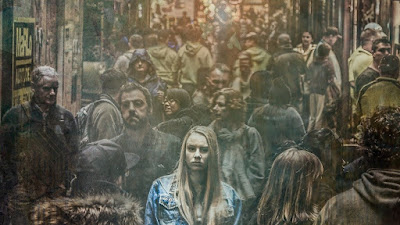
A crowd of people.
Image by Graehawk on Pixabay.
Quotes:
Democracy is premised on the belief that we can trust ordinary people to make consequential decisions. It’s in some ways an enlightenment ideal premised on another enlightenment ideal: the triumph of reason and the capacities of ordinary people. To buy into it, you have to believe that people will be more loyal to principles and discernment than to leaders and groups, and in that sense, democracy has always been a risky project. If democracy requires independent-minded people who can reason well, autocracy requires the opposite, people who will obey orders about what to think as well as do.
"Why Republicans Keep Falling for Trump’s Lies." Rebecca Solnit. New York Times. Jan. 5, 2022.
Now, credulity does not stand alone. In turn, it is part of an attitude called dogmatism — the belief in and defense of "truth." Those who believe strongly in "truth" will try to find it through the mechanism of belief. We are today a "belief explosion" which throws skepticism to the winds and attaches itself in a credulous manner to mental malpractice and intellectual humbuggery of every kind — to faking it, small and big. Without dogmatism, the Fake Factor could not exist. Because of dogmatism, that ancient enemy, everything goes, or very nearly.
Arthur Herzog. The B.S. Factor: The Theory and Technique of Faking It in America. (1973) Baltimore, Maryland: Penguin Books Inc., 1974. p. 183.
Constant development is the law of life, and a man who always tries to maintain his dogmas in order to appear consistent drives himself into a false position. That is why Emerson said that foolish consistency was the hobgoblin of little minds... * * * A devotee of Truth may not do anything in deference to convention. He must always hold himself open to correction, and whenever he discovers himself to the wrong, he must confess it at all costs and atone for it.
Gandhi. Young India, March 2, 1922 and September 20, 1928. Quoted in Louis Fischer's 1962 book The Essential Gandhi
No ideology can tolerate a full historical consciousness. Only realism can...
Clive James. Cultural Amnesia: Necessary Memories from History and the Arts. (2007) New York: Norton, 2008. p. 44.
Our fearsome gods have only changed their names: they now rhyme with ism.
C. G. Jung. Aspects of the Feminine. (Collected Works.) Translation by R. F. C. Hull. New York: MJF Books, 1982. p. 93.
For an ideology differs from a simple opinion in that it claims to possess either the key to history, or the solution for all the "riddles of the universe," or the intimate knowledge of the hidden universal laws which are supposed to rule nature and man.
Hannah Arendt. The Burden of Our Time. London: Secker and Warburg, 1951. Published in the US as The Origins of Totalitarianism. p 159.
Ideology functions as a machine to destroy information, even at the price of making assertions in clear contradiction of the evidence.
Jean-Francois Revel, La Connaissance Inutile, p. 153. Quoted in Clive James. Cultural Amnesia: Necessary Memories from History and the Arts. (2007) New York: Norton, 2008. p. 605.
In 1897, French sociologist Émile Durkheim theorized four different types of suicides — the egoistic, the altruistic, the anomic, and the fatalistic —
I love how sure and clear these words sound. I love anything that breaks suffering down into a clean taxonomy you might look to when lost and nod your head in the performance of understanding.
sam sax, Yr Dead, San Francisco: McSweeney’s, 2024. p. 207.

And people distinguish cis and trans:

Katelyn Burns, Oct 24, 2025:

"...this week, a federal judge in Mississippi overturned an Obama era rule mandating that health care providers and insurers can not deny trans people gender affirming care if that same care would be available to cisgender people for reasons other than transitioning their sex.

The court's ruling is incoherent, and essentially establishes trans people as a disfavored class of American citizen, with fewer rights than everyone else. If you're cis, you can walk into a doctor's office tomorrow and ask for a breast augmentation or reduction and they will do it, no questions asked. But if you are trans, no such luck.

If you are cis, and you want testosterone so you can feel horny again, that's fine as long as you're cis. Go pound rocks if you're trans. If you want estrogen for your perimenopause, go ahead. Fuck you if you're trans.

Somedays I hate this world, and today is one of them."

Categorizing is necessary for humans, but it becomes pathological when the category is seen as definitive, preventing people from considering the fuzziness of boundaries, let alone revising their categories. Contagion was the culprit. If you selected one hundred independent-minded journalists capable of seeing factors in isolation from one another, you would get one hundred different opinions. But the process of having these people report in lockstep caused the dimensionality of the opinion set to shrink considerably — they converged on opinions and used the same items as causes.
Nassim Nicholas Taleb. The Black Swan: The Impact of the Highly Improbable. New York: Random House, 2007. p. 15.

But can it be avoided?

One suspects that philosophy of mind has not in fact been performing the task, which Professor Hampshire recommends, of sorting and classifying fundamental moral issues; it has rather been imposing upon us a particular value judgment in the guise of a theory of human nature. Whether philosophy can ever do anything else is a question we shall have to consider.
Iris Murdoch. "The Idea of Perfection" in The Sovereignty of Good. New York: Schocken Books, 1971. p. 2.

If you'd like to learn more about my work, I've published books. Also, I write for Medium. There, readers with a paid membership don't have to worry about the paywall.

Tuesday, January 4, 2022

God Doesn't Believe in Atheists, and I Don't Believe in God

An enormous ghostly foot steps on a field.
Image by KELLEPICS on Pixabay.

On Nov 14, 2025, I moved this essay to Medium. It's a 5-minute read.

But you can still read the background here...

I listened to the 1-hour audiocassette lecture in 2011. Since it had the same title as the 650-page book, I treated the abridged audio as an alternate version of the book, and I posted my comments about it to Goodreads under this book title. I didn't leave the book a starred rating, so as not to affect its collective starred rating, and I did specify I was responding to the abridged audio and not to the full print version. This generated a few negative comments from people who were mad at me for — in their view — reviewing a book that I admitted to not having read.

I disagree with this characterization of the book and of my activity. Audiobooks are books; abridged books are books; abridged audiobooks are books. If a one-hour recorded lecture is not meant to be considered a valid version of the longer print book, then the author or publisher should not give them the same title, as that causes confusion, the responsibility for which falls on them. Finally, I don't believe there is a One True Answer for how people ought to use the Goodreads website; it's social media, and we make it up as we go along. Goodreads may have hoped people would use their website in a particular way, but people who use the site may come up with creative interpretations and we are not necessarily wrong when we do so.

Nonetheless, I no longer wish to receive sporadic comments questioning the validity of why I posted comments about an abridged audio on the product webpage of the longer book ten years ago. I mean, the planet is burning, can we worry about bigger things please. But also, to the extent that I allow myself to be trolled, I admit to being peeved that I have logged over 1750 full-length books that I've read and yet internet strangers are repeatedly needling me about my intellectual capacities because of the single instance of an abridged audiobook among them. (Never mind that I, not they, am the one who bothered to engage the author's argument.) From their perspective, it makes sense that they comment on this post, since it is the post that they saw; but from my perspective, I wonder why this post is high-engagement and rarely does anyone interact with my other 1750 posts. It is a headscratcher. Thus, I have moved the old essay from Goodreads to this webpage. I have rephrased and reformatted the essay for clarity.

May I also add that it is common for people to complain that an online comment is not the correct length — it needs to be shorter to hold their attention, or it needs to be longer for me to prove my intellectual capacity to them upon their demand. That's in the same bucket with people who claim I should not have posted the essay in an internet field labeled "review" because my essay is, for one reason or another, not a proper "review." Or, if the field is labeled "comment," I shouldn't write a full-fledged review, but rather a shorter "comment," because that would be the proper use of the field. People have assumptions about the "proper" use of fields on the internet. (It's almost as if the proper use of the internet were ordained by God.) When they cannot or will not engage with the substance of what I wrote, they sometimes pick an argument with my choice of website, or my choice of labeled field on that website, or the length of what I wrote. But actually, that's not their concern. The reason they criticize the way I wrote what I wrote (be it essay, review, comment, or what have you) is that they don't agree with my point at all and they would like me to stop making it. Until they provide a counterargument, of course, I'm left with my own argument. Thus, my argument here has not changed since 2011, as no one has yet bothered to rebut it.


If you'd like to learn more about my work, I've published books. Also, I write for Medium. There, readers with a paid membership don't have to worry about the paywall.

Friday, November 12, 2021

'People Love Dead Jews' by Dara Horn

In Dara Horn's introduction to People Love Dead Jews (2021), the opening personal anecdote is from one of her own early interactions. Two non-Jewish girls asked her how she could possibly be blonde-haired and blue-eyed if she were truly Jewish. Didn't being Jewish entail that she was "from the Middle East"? Didn't Hitler report that "you all were dark"? Horn reports that, in the moment, she had the presence of mind to give "the correct answer: 'Hitler was full of shit.'" Today, her follow-up insight is that these girls "had learned about Jews mainly because people had killed Jews. Like most people in the world, they had only encountered dead Jews: people whose sole attribute was that they had been murdered, and whose murders served a clear purpose, which was to teach us something. Jews were people who, for moral and educational purposes, were supposed to be dead."

Non-Jews perceive Jewish identity “as simply a state of non-being: not being Christian or Muslim or whatever else other people apparently were,” and, when they considered Jews, to them “dead Jews were the most popular of all.” Disproportionately to Jews' percentage of the overall population, they have "played a behemoth role in other people’s imaginations." Horn decided that "the enormous public interest in past Jewish suffering" is not "a sign of respect for living Jews" but is instead "deeply perverse" and, "even in its most apparently benign and civic-minded forms, [it] is a profound affront to human dignity."

The book has a chapter on The Diary of Anne Frank. Anne Frank was a Jewish girl who hid in her closet in Amsterdam for two years before the Nazis finally found her and sent her to Auschwitz, then Bergen-Belsen, where she died at age 15. Her diary (published posthumously) is enormously popular precisely because this young teenager didn't write "a work about genocide. If it were [about genocide], it is unlikely that it would have been anywhere near as universally embraced." Analyzing Frank's work more precisely, we can see that she "wrote about people being 'truly good at heart' before meeting people who weren’t." She was still a child, and the Nazis hadn't captured her yet. The fact of the genocide, the context for which she was being hidden in a closet, "does not come up at all in Anne Frank’s writings" [emphasis mine].

Aphorisms like "people are truly good at heart" help us to "feel forgiven," Horn says. They seem to offer "grace and absolution from a murdered Jew (exactly the gift that lies at the heart of Christianity)." But what does Frank get out of this? She never saw adulthood. She wrote in her diary: “I want to go on living even after my death!" If we think we are restoring her to life simply by reading her words, we are thinking too metaphorically. She was someone who wanted to live, and she wasn't allowed to. Disturbingly, it is her very "lack of a future" that generates "the entire appeal of Anne Frank to the wider world." In Horn's analysis, Anne Frank is one of those famously dead Jews who non-Jews seem to like more because they are dead. Their deadness is supposed to teach something and simultaneously absolve people for having required or allowed someone to die given that the living have learned something from it.

The Amsterdam house where Anne Frank famously hid is now a museum. One Jewish employee was not permitted to wear his yarmulke to work because, the employer argued, having visibly Jewish employees might (somehow?) make the organization seem biased (toward acknowledging the existence of Jews?), and four months passed before the museum agreed to let the employee wear the yarmulke. As Horn points out, just as Anne Frank was forced to hide her Jewishness, the directors of the museum tried to force their employee to hide his Jewishness. They had not learned from Anne Frank's plight; they replicated it. People want Jews to be invisible. People especially love dead Jews, as the title of Horn's book has it.

A related example of the same cultural preference: Elie Wiesel's first version of his Holocaust memoir, And the World Was Silent, was in Yiddish and it was angry. He toned it down "with the help of the French Catholic Nobel laureate François Mauriac", and it became La Nuit [Night] in French, "a work that repositioned the young survivor's rage into theological angst," after which he won the Nobel Peace Prize and was featured by Oprah’s Book Club.

Regarding museums that center on dead Jews — that is, on "anonymous dead people pressed into service to teach us something" a bit in the same way that corpses are used in medical exhibits — Horn discusses a couple approaches that these museums commonly take. One is to focus on the Jews' lives and culture while entirely avoiding the topic of why and how they died. This is done in Harbin, China, regarding the Russian Jewish community that was once there but is now extinct. These Jews are imagined to represent something desirable, like success in business, but there is just not a lot of explicit reflection on the fact and circumstances of their extinction. Another approach, taken elsewhere, is to focus only on the topic of why and how Jews died. This is a typical approach of Holocaust exhibits: making a general exhortation to empathy, asking the visitor to imagine what if this had been your fate? rather than to learn about the individual and cultural specificity of the people whose fate it actually was. One way or the other, there is a disproportionate focus on Jews' life or death; the commonality of these museums is that the Jews who are the museums' subjects are now dead; and to fully understand, care, and honor them, we ought to bring both their lives and deaths into view simultaneously, but this is not done because of the roles that non-Jews want dead Jews to play. Either the institutional narratives indulge in stereotypes of Jewish life (positive or negative) that those Jewish individuals and communities cannot rebut because they are already dead, or they invoke Jewish death as a metaphor for something about human dignity, suffering, and forgiveness that non-Jews can apply to themselves without seeing the specificity of Jewish life. But the Holocaust is not "a fancy metaphor for the limits of Western civilization" and, "for us [living Jews], dead Jews aren’t a metaphor, but rather actual people that we do not want our children to become." The Holocaust was a genocide, not "a morality play, a bumper sticker, a metaphor."

Horn points out a side-effect of delving into factual detail about how the Nazis murdered their victims. "Yes," she says, "everyone must learn about the Holocaust so as not to repeat it. But this has come to mean that anything short of the Holocaust is, well, not the Holocaust. The bar is rather high." We have come to hear a particular kind of excuse for doxxing, harassment, trolling: "Doxxing Jewish journalists is definitely not the Holocaust. Harassing Jewish college students is also not the Holocaust. Trolling Jews on social media is not the Holocaust either, even when it involves photoshopping them into gas chambers." Drily, she notes: "It is quite amazing how many things are not the Holocaust." In other words, closely examining the specifics of the Nazis' awfulness is an indirect way of licensing ourselves to feel we are forgiven for not being as bad as the Nazis.

Of the rescue of Jewish artists and intellectuals by the non-Jewish American Varian Fry, Horn raises at least two questions. First, which artists and intellectuals were judged worthy to be saved? Did their work need to appear minimally Jewish or otherwise appeal to non-Jews? For example: "That [Marc] Chagall’s art did not rely on a Jewish language — that it had, to use that insidious phrase, 'universal appeal' — allowed him a chance to succeed as an artist in the West." This is an important question. There is a caveat: In the context of asking who survives genocide (whether in terms of their bare life or their culture), it can tend to be victim-blaming, as it may imply that certain individuals were too Jewish or not Jewish enough and that they should have known the more pragmatic or more ethical thing to do, as those choices may seem clear to us from our very far-off 21st-century armchairs. Secondly, the praise of a single rescuer may fail to point out all the people in the dominant culture who weren't rescuers, and reflection upon the broader problem could lead us to a refusal to take the genocidal situation as a given and rather to object to there having been a need for "rescuers" in the first place. The discussion of how Jews (artists/intellectuals or not) chose, or were forced, to moderate their identities, and whether they ought to have made different choices, can evade the question of why they were not simply allowed to exist however they liked. The Holocaust was not a "natural disaster." It was not "a shipwreck or an epidemic." If we are going to make philosophical thought-experiments of it, we should ask whether, "if someone was in a position to choose whether to save person A or person B, shouldn't whole societies have been in the position to reject the notion of genocide altogether?"

Horn doesn't find "rescuer stories" inspirational since, when she looks at the statistics, they demonstrate that "the most righteous people available could do no more than provide, for a tiny number of people, the possibility of remaining alive." Also, while the rescuing may have provided a high point in the lives of the rescuers (at least when they too had reached safety and could ethically judge themselves in retrospect or wax nostalgic), it was a low point in the lives of communities that needed rescuing. Even those who survived may have felt ashamed (consciously or not) to have needed rescuing.

Fry, the rescuer, noted the philosophical problem in a New Republic article: How could it have been that the “heirs of the humanist tradition” committed genocide? But they did — so what then, Horn asks, was Fry trying to save when he targeted artists and intellectuals for rescue? He viewed them as part of the same European culture — or didn't he? They, too, belonged to the same humanist tradition — or didn't they?

Why did Fry — a good person — want to save people who fit artistic and intellectual criteria rather than, say, ethical criteria? Why did he not rescue people who were more likely to want to be rescuers themselves? Why does a certain discourse of ethics-and-culture value the preservation of culture but not primarily the preservation of its own ethics?

In this collection, Horn has an essay in which she acknowledges that American Jews who changed their last names generally did so voluntarily to avoid antisemitism; it was not done to them at Ellis Island. They often told their families it happened at Ellis Island, but this lie was told out of kindness, since they did not want to "implicate America" and thereby spoil their children's impression of their new home. "If you tell that story to your children," Horn says — that is, if you tell the truth that you chose to change your name to assimilate — "you’d be confirming two enormous fears: first, that this country doesn’t really accept you, and second, that the best way to survive and thrive is to dump any outward sign of your Jewish identity." If you instead lie about what happened, "you’ve made America into a place so welcoming that happy non-Jews greet you at the door, and then make innocent mistakes that coincidentally help you to fit right in, at no cost to you or to the three-thousand-year-old tradition you want to maintain." The name changes weren't happy, coincidental, "innocent mistakes" — they were choices by immigrants about their own names. Horn expresses compassion for people who chose to change their names. American Jews have long told themselves that the United States "has never been a place where antisemitism affected anyone’s life. We don’t simply prefer this founding legend. We need it." Psychologically, anyway, it has served a purpose. Here, I note that Horn is forgiving of myths that Jews tell to promote their own survival and wellbeing, and less forgiving of myths that non-Jews invent for their own consumption of stories about Jewish death.

If we cannot immediately think of different ways to talk about living Jews and dead Jews, we should try harder. Horn asks us to think about "the books the murdered people were reading at the hour of their deaths" and the books that Anne Frank did not live to write.

People Love Dead Jews can be ordered in print through Bookshop. I wrote a different essay about it for Medium. Readers with a paid membership on Medium don't have to worry about the paywall.

If you'd like to learn more about my work, I've published books.

Tuesday, September 28, 2021

Law is based on 'judges, well, judging'

In a September 28, 2021 article for Raw Story, Terry H. Schwadron reports:

[Jessica] Levinson, a professor at Loyola Law School...explains that [Jonathan] Mitchell, who now runs his own one-man law firm, is dead set against both Roe and the cases governing same-sex rights because "they're based on judges, well, judging."

The same Jonathan Mitchell who is seeking termination of abortion as legally valid argues in his Mississippi abortion case challenge due for hearing in December that women can have no protected right to abortion because it was never written in the Constitution.

The metaethical question implicit here — as always, when discussing Constitutional fundamentalism — is this: Is it relevant that the Constitution itself is based on Madison, well, maddening, and the Founding Fathers, well, foundering? Or, are those human sources infallible or otherwise not to be questioned, and the only human infallibility that matters is judges, well, judging?


If you'd like to learn more about my work, I've published books. Also, I write for Medium. There, readers with a paid membership don't have to worry about the paywall.


judge's gavel
Gavel by Arek Socha from Pixabay

Here, Kristi Noem uses the term "activist" as an insult against a judge to explain why she doesn't have to follow the judge's orders.

(While we're here, think about what it means when they call anyone else an activist. It's just a word they use to delegitimize that person and whatever power they may have.

KARL: Did you know about the judge's order when you issued your order for the planes to continue? KRISTI NOEM: This is an activist judge. We comply with all federal orders that are lawful and binding.

[image or embed]

— Aaron Rupar (@atrupar.com) November 30, 2025 at 11:28 AM

They’re simultaneously arguing that soldiers have to follow all orders from the president, legal or not, but they get to ignore orders from a federal judge if they feel they’re not legal.

[image or embed]

— Kevin M. Kruse (@kevinmkruse.bsky.social) November 30, 2025 at 12:43 PM

Thursday, August 12, 2021

Eunuchs in Istanbul's Topkapi Palace: An essay in 'Harem Histories'

Maiden's Tower in Istanbul

On the 2010 book Harem Histories: Envisioning Places and Living Spaces, edited by Marilyn Booth:

The editor's introduction mentions the 1909 publication of Demetra Vaka Brown's Haremlik: Some Pages from the Life of Turkish Women. "If Vaka Brown exploited the drawing power of the harem as an image of exoticism and mystery for her North American friends and readers, she also sought to complicate that image for her readers, contrasting it with the 'hatred and scorn' she had heard Americans express toward Turkey, as they assured her that Turkish 'women [were] miserable creatures.'" And so this 2010 book, Harem Histories, asks how the harem and other "understandings of gendered space in the societies where the harem structured women's and men's lives" was represented in those societies. Not in outside societies that may have misunderstood or criticized it, but in the society of which the harem was a part, while acknowledging "perpetual cultural motion."

One of the essays is "Panoptic Bodies: Black Eunuchs as Guardians of the Topkapi Harem" by Jateen Lad.

  • "In the enormous corpus of European harem literature and paintings, sharp-eyed eunuchs became a mandatory topos, their presence at the margins bringing to light the perversity of the scenario which they helped frame: the perfect, fair-skinned, and beautiful being entrusted to the incomplete, dark, and mutilated." (p. 137)
  • The Topkapi harem was "precisely configured" and it was "all held together by a network of spaces guarded by the black eunuchs." (p. 150)
  • "Thus, despite the black eunuchs' position at the margins, the architecture suggests that they were central to all comunication within the harem." (p. 165)

Marilyn Booth, editor. Harem Histories: Envisioning Places and Living Spaces. Durham & London: Duke University Press, 2010.

Image of Maiden's Tower in Istanbul by Adem AY from Pixabay. Maiden's Tower is about 2 km across the water from Topkapi Palace.

Also of interest:

"Closed to the public for more than a decade, the stunning Zeyrek Çinili Hamam has just reopened its wooden doors to the world. Located in Istanbul’s Zeyrek neighborhood – on the European side of the Bosporus, adjacent to the historic Fatih district – the bathhouse was built in the 1530s by Mimar Sinan, the architect-in-chief to illustrious Ottoman sultans such as Suleiman the Magnificent."
— The 500-year-old hamam bringing Istanbul’s past to life Alice Barnes-Brown, CNN, September 28, 2023

"The Hamam al-Samra, in the Al-Zeitoun neighborhood of northern Gaza, was said to have been built in the 14th century and was the only public bathhouse in the Gaza Strip. It was destroyed in an Israeli airstrike on December 15, [2023,] its owner, Salim Al-Wazeer, told CNN."
— Israeli military acknowledges destroying Ottoman-era bathhouse while targeting Hamas in Gaza, Ibrahim Dahman and Stephanie Halasz, CNN, December 30, 2023


You may also be interested in my nonfiction books about how eunuchs are treated in fiction and in nonfiction:


If you'd like to learn more about my work, I've published books. Also, I write for Medium. There, readers with a paid membership don't have to worry about the paywall.

Saturday, July 31, 2021

A cool video I found: 'Minotaur as trans & disabled' + Monster Theory

"Trapped in the Labyrinth: The Minotaur as Trans and Disabled"
length: 50:50
Johannes Evans
Jun 3, 2021

From the YouTube description: Johannes looked at the minotaur story investigating the minotaur as trans and disabled and through a trans and disabled lens.

You can pay Johannes for this work through Ko-Fi.

You may also be interested in Roo Benjamin's article A Queer Interpretation of the Greek Myth, ‘Theseus and the Minotaur’.

"The Unnamable" (1925) presents a hybrid entity - or the ghost of one - which is evocative of the ancient minotaur. The real-life incident Lovecraft drew on was actually a very sad case of a man accused of bestiality in which he, the animal, and its deformed offspring were all put to death.

— Deep Cuts in a Lovecraftian Vein (@deepcuts.blog) December 31, 2025 at 11:56 AM

A new game on Steam: "Minos is a maze-building roguelite where you, the fabled Minotaur, must defend your sanctuary from bloodthirsty adventurers. Design and re-design deadly labyrinths, set traps, and turn every brave fool into your next victim."
Released: 9 Apr, 2026
Developer: Artificer
Publisher: Devolver Digital

Monday, January 4, 2021

'Writing was sympathetic magic'...

Today, in high-information environments, people may see writing as "logorrhea," or worse, a force of destruction and entropy. Writing can cause something simple to destabilize and to become unnecessarily complex.

But in low-information environments (and especially long ago), people have been amazed by writing and grateful for its contributions.

Writing seemed to make an idea immortal.


"To the ancients, writing was wizardry. ...the discovery of a method to project one’s self beyond a single life span seemed nothing less than miraculous." Leonard Shlain. The Alphabet Versus the Goddess: The Conflict Between Word and Image. New York: Penguin/Compass, 1999.


This also seemed to reinforce the truth of a myth. If the myth had seemed true enough to begin with, writing the myth made it tangible and permanent and thus made it seem more real. Writing something seemed to make it true.


"First-century people just didn't have the same sense of factuality that we do, or of writing either. Writing was sympathetic magic, we should remember: writing something down was to an extent making it so, it was a creative rather than mimetic act..."
John Updike. Roger's Version. New York: Alfred A. Knopf, 1986.

"While the story of Christ was in many ways a typical hero myth — the virgin birth, the supernatural acts (miracles), the rebirth into immortality — in one respect it was unique: it claimed not to be a myth at all. It claimed to be history. Traditional societies do not distinguish between myth and history in the way that we do. Mythical events were not thought to have literally happened; yet in another sense they were true, as if they had. ‘These things never happened, they are always’, wrote Sallust sublimely (86-34 B.C.). Conversely, historical events are always mythologized (the Trojan war, for example). It is as if what literally happened is less important than what metaphorically happened. But the two are combined to create what ‘really’ happened.
When the story of Christ was held to be history, its events literally true, myth suffered a blow. It began to acquire its modern meaning of something unreal, imaginary (as opposed to imaginative) and merely fictional. At the same time, truth and reality began to be measured by their literal truth and reality. Literalism began with Christianity."
Patrick Harpur. The Philosopher's Secret Fire: A History of the Imagination. p. 81.


art of a flying angel

Many People Have a Vivid ‘Mind’s Eye,’ While Others Have None at All, Carl Zimmer, NYT, June 8, 2021:

"...Dr. Zeman and his colleagues have heard from more than 12,000 people who say they don’t have any such mental camera. The scientists estimate that tens of millions of people share the condition, which they’ve named aphantasia, and millions more experience extraordinarily strong mental imagery, called hyperphantasia.

In their latest research, Dr. Zeman and his colleagues are gathering clues about how these two conditions arise through changes in the wiring of the brain that join the visual centers to other regions. And they’re beginning to explore how some of that circuitry may conjure other senses, such as sound, in the mind."

Though people with aphantasia "had little trouble recalling things they had seen," such as that pine needles are a darker shade of green than grass, they "don’t do as well as others at remembering details of their own lives. It’s possible that recalling our own experiences — known as episodic memory — depends more on the mind’s eye than does remembering facts about the world." They may be "more likely than average to have a job that involved science or math." They "may escape some of the burdens caused by reliving traumatic experiences, because they don’t have to visually replay them." Zeman says: "Anecdotally, they’re really good at moving on."

By contrast, people with hyperphantasia have "intensely strong visions." Cognitive neuroscientist Joel Pearson explains: “It’s like having a very vivid dream and not being sure if it was real or not" — such that remembering watching a movie is "indistinguishable" from actually watching it. This "may open the way to false memories" and may "give rise to regret and longing."

"Dr. Zeman and his colleagues estimate that 2.6 percent of people have hyperphantasia and that 0.7 percent have aphantasia."

For more info, see the Aphantasia Network.


If you'd like to learn more about my work, I've published books. Also, I write for Medium. There, readers with a paid membership don't have to worry about the paywall.

Wednesday, November 11, 2020

Metacognition and faith

I stumbled across an old note to myself. It was Stanley Fish's 2009 review of Terry Eagleton's book, in which examples of "theological questions" are proposed, such as: “Why is there anything in the first place?” “Why what we do have is actually intelligible to us?” “Where do our notions of explanation, regularity and intelligibility come from?” Eagleton's position (as Fish portrays it) is that these questions are valuable as a sort of art form. They are not intended to address matters factually and attain an instrumental goal; we have science for that. Religion is not after facts. It is trying "to tackle what is at stake” (in Eagleton's words); it has something to do with humility and hope that properly ought to come prior to the search for facts.

It occurs to me that a question like "Where do our notions of explanation...come from?" is difficult to answer by any method — never mind the science-vs.-religion debate — because it is an attempt to use consciousness, reason, and language to interrogate and defend itself. A living being can't pick itself apart to learn more about how it thinks and moves. It has to take certain basic parts of itself for granted.

I wonder if what is being said here is that religion pursues a type of metacognition? and that "faith" is a type of humility that exposes the metacognition we do or don't have and can or can't develop? Here is "metacognition" explained by Tom Nichols:

Students who study for a test, older people trying to maintain their independence, and medical students looking forward to their careers would rather be optimistic than underestimate themselves. Other than in fields like athletic competition, where incompetence is manifest and undeniable, it’s normal for people to avoid saying they’re bad at something. As it turns out, however, the more specific reason that unskilled or incompetent people overestimate their abilities far more than others is because they lack a key skill called “metacognition.” This is the ability to know when you’re not good at something by stepping back, looking at what you’re doing, and then realizing that you’re doing it wrong. * * * The lack of metacognition sets up a vicious loop, in which people who don’t know much about a subject do not know when they’re in over their head talking with an expert on that subject. An argument ensues, but people who have no idea how to make a logical argument cannot realize when they’re failing to make a logical argument. In short order, the expert is frustrated and the layperson is insulted. Everyone walks away angry. — Tom Nichols. The Death of Expertise: The Campaign Against Established Knowledge and Why it Matters. Oxford University Press, 2017.

(Overestimating one's own ability has been called the "Dunning-Kruger effect," but independently of the psychologists who studied it, it might simply be called a lack of metacognition.)

But often these primary assumptions cannot be questioned very thoroughly or for very long, and what we end up with as the product of "faith" is not humility but arrogance. Partly because: We begin with certain identities, and as a result we see what we want to see in the world. Even when we say we're trying to interrogate our beliefs, sometimes all we're doing is massaging data to reaffirm them, and we are deluding others and perhaps even ourselves.

Another passage from Nichols' book:

...a 2014 study of public attitudes about gay marriage went terribly wrong. A graduate student claimed he’d found statistically unassailable proof that if opponents of gay marriage talked about the issue with someone who was actually gay, they were likelier to change their minds. ... It was a remarkable finding that basically amounted to proof that reasonable people can actually be talked out of homophobia. The only problem was that the ambitious young researcher had falsified the data. ... As Konnikova put it in her examination of the fraudulent gay-marriage study, confirmation bias is more likely to produce “persistently false beliefs” when it stems “from issues closely tied to our conception of self.” These are the views that brook no opposition and that we will often defend beyond all reason, as Dunning noted: Some of our most stubborn misbeliefs arise not from primitive childlike intuitions or careless category errors, but from the very values and philosophies that define who we are as individuals. Each of us possesses certain foundational beliefs — narratives about the self, ideas about the social order — that essentially cannot be violated: To contradict them would call into question our very self-worth. As such, these views demand fealty from other opinions. Put another way, what we believe says something important about how we see ourselves as people.

The "foundational beliefs" might be some identity, intrinsic or cultural. They might be tied to an organized religion. But, I imagine, they might also be a set of assumptions that are harder to pin down to any one "thing." We sometimes try to prove a point for the sake of proving a point, and the way it forms and buttresses our identity is a downstream effect.


If you'd like to learn more about my work, I've published books. Also, I write for Medium. There, readers with a paid membership don't have to worry about the paywall.


abstract-style image of multicolored staircase

Wednesday, October 21, 2020

On deciding to act (quotes)

"Unawareness is the root of all evil."
Anonymous Egyptian Monk. Quoted in Ernest Kurtz and Katherine Ketcham. The Spirituality of Imperfection: Storytelling and the Search for Meaning. (1992) New York: Bantam, 2002. p. 68.


"Although self-awareness, by itself, does not lead to behavior change, it is foundational."
Doug Silsbee. Presence-Based Coaching: Cultivating Self-Generative Leaders Through Mind, Body, and Heart. San Francisco: Jossey-Bass, 2008. p. 51.


"One simple criterion for distinguishing authentic intuition from ego projections or wishful thinking is that the real stuff is delivered as invitations, not demands. The words 'You should do...' or 'You must do...' are not part of intuition. Rather, intuition is your soul saying, 'Please consider...' or 'Will you...?'"
Sharon Franquemont. You Already Know What to Do: 10 Invitations to the Intuitive Life. New York: Jeremy P. Tarcher/Putnam, 2000. p. 5.

As a character decides whether to jump into a well:

"Khalil is listening; he hears its whispers; he thinks its soft enticements are his own wise thoughts. He believes he's deciding — but all he's doing is listening to the whisper of the well."
John Speed. Tiger Claws. New York: St. Martin's Press, 2007. p. 162.


"You sit down at the computer and say, 'What am I supposed to do?' The regular gamers in the room have to explain: 'You're supposed to figure out what you're supposed to do.'"
Steven Johnson. Everything Bad is Good For You: How Today's Popular Culture is Actually Making Us Smarter. New York: Riverhead Books, 2005. p. 42.


"What's intellect?"
"Well, intelligence. Aql." I nod. "Aql nazari. A talent for imagining. And aql amali. A talent for doing."
Uzma Aslam Khan. The Geometry of God. Clockroot Books, 2009.


"Yet when the time comes, I am not able to pull the trigger. I tell myself that the strategy works generally, but might not work with this hand. I cannot, by thought, generate the feeling of conviction that the laws of probabilities are actually in effect and that betting a bad hand occasionally is preferable to always folding. I cannot convince myself that what I know to be correct is actually correct."
Robert A. Burton. On Being Certain: Believing You Are Right Even When You're Not. New York: St. Martin's Griffin, 2008. p. 114.


"...if people do things for lunk-headed, backward-looking reasons, why wouldn't we also do things for significance-seeking, self-actualizing reasons? If we're predictably irrational — and we clearly are — why couldn't we also be predictably transcendent?"
Daniel H. Pink. Drive: The Surprising Truth About What Motivates Us. Canongate, 2010.


"To come to man's estate it is not necessary to get oneself killed around Madrid, or to fly mail planes, or to struggle wearily in the snows out of respect for the dignity of life. The man who can see the miraculous in a poem, who can take pure joy from music, who can break his bread with comrades, opens his window to the same refreshing wind off the sea. He too learns a language of men.
But too many men are left unawakened."
Antoine de Saint-Exupéry. Wind, Sand and Stars. (1939) Translated into English by Lewis Galantiere. London: The Folio Society, 1990. p. 195.

"The angel was thinking of its mission to find Essie. It had generally relied on its instincts for this kind of thing, as it had relied on its instincts for the less complex, but no less important, mission of saying Kaddish and some blessings.

Little Ash was the one who got caught up in details, and made what humans would recognize as plans. The angel simply expected that its mission would be fulfilled until, eventually, it was. Little Ash was always telling it this was an inefficient way to do business, but the angel felt doing business was a terrible, demonic way to describe the feeling of being needed. It wasn’t doing business. It was being a mitzvah. The demon was too caught up in being Little Ash to quite understand what was so satisfying about that.

My name, the angel insisted to itself, is Rescue. I am finding Essie. I know what my task is, and I am my task."
Sacha Lamb. When the Angels Left the Old Country. Levine Querido: 2022.

"As Erich Fromm says, “The aim of sadism is to transform man into a thing, something animate into something inanimate, since by complete and absolute control the living loses one essential quality of life — freedom.” This is the banality of evil.
The banality of good must, necessarily, counter the turning of people in automatons. It must work against the fascistic and sadistic mode of being."
The Banality of Good: On the millions of people joining the fight against fascism. J. P. Hill, New Means, Feb 10, 2026

"We can win, you all. But not if we don’t throw those parties. A million of them. Some quiet, some loud. Some with a raucous dance floor, others with a cozy circle of knitters on couches. A fair number of potlucks, I hope, but also plenty of food and diaper delivery spreadsheets. Not every party will be for you, and thank goodness for that, but if enough of us raise a hand, everybody will get an invite to the one they’ve been craving.
It’s never about one night. It’s never about one performance. It’s never about heroes or saviors, be they the pop stars with microphones or the most radical anarchist at the protest. It’s about remembering that, before we hated fascism, we loved each other. And we’re gonna keep loving each other, on the streets, in our cluttered living rooms, and on so many dance floors. We’re going to love each other until we win, and then we’ll throw one more party, the best one of our lives."

— Garrett Bucks, A single party won't save us, but a million parties will: Considering a halftime show, less as an object of adoration than a blueprint, Feb 9, 2026


If you'd like to learn more about my work, I've published books. Also, I write for Medium. There, readers with a paid membership don't have to worry about the paywall.

a young woman swinging on a pole in the woods

Swing by Lars Nissen from Pixabay

Wednesday, October 14, 2020

Faith: Its purpose and limits (Quotes from others)

Hegel said: “With this possibility of knowing God the obligation to know Him is imposed upon us.”

But it may well be impossible to know God.

Some people say that faith is a type of certainty. An Israeli man quoted by Amos Oz: "You cannot separate faith and certainty. They are one and the same. In my vocabulary they are synonyms." French philosopher Simone Weil (February 3, 1909–August 24, 1943): "In what concerns divine things, belief is not appropriate. Only certainty will do. Anything less than certainty is unworthy of God."

Others steer away from certainty. Jim Wallis, an evangelical pastor with the social justice organization Sojourners: "Real faith, you see, leads us to deeper reflection and not -- not ever -- to the thing we as humans so very much want: Easy certainty." Frank Schaeffer puts it this way: "atheism and fundamentalist religion," though "ideological opposites," nevertheless "often share the same fallacy: truth claims that reek of false certainties. I also believe that there is an alternative that actually matches the way life is lived rather than how we usually talk about belief. I call that alternative "hopeful uncertainty."

It isn't to the benefit of any ideology or practice to allow us to achieve certainty, for then we would abandon the quest it had assigned to us. If we achieved certainty in faith, religion would have made itself obsolete. "Ignorance is the ground of thought. Unproof is the ground of action. If it were proven that there is no God there would be no religion. ... But also if it were proven that there is a God, there would be no religion..."

But what can religion do for us? Does it tell us that we are broken — and then try to fix us, or inspire us to fix ourselves, or give us the tools to make things better? G. K. Chesterton: "When the world goes wrong, it proves rather that the Church is right. The Church is justified not because her children do not sin, but because they do." As stated by someone Christopher Phillips quoted: "Socrates tried to do the right thing at a time when everyone else was doing the wrong thing. And you know they were all doing the wrong thing in retrospect, because their civilization crashed and burned. As long as just one person is willing to do the right thing amid a sea of badness, there’s reason to hope. Socrates’ life and death, from what I’ve been reading, were modeled on a sense of duty that was ‘faith-based’ — he had faith in people to do the right thing, at least over the long haul, even if over the short term most are acting foolishly. If we don’t all act out of a similar faith, how can we ever hope to see light again in dark times?"

Is the project always incomplete? Leslie Dewart: "For faith is always coming-into-being, it is never quite fully faithful, it is always on the way, hence never perfect and achieved. And if faith is a mode of existence, then Christian theism is a way of life."

And we are never introduced to the whole God?

Frederica Mathewes-Green: "People newly coming to church should have an unfamiliar experience. It should be apparent to them that they are encountering something very different from the mundane. It should be discontinuous with their everyday experience, because God is discontinuous. God is holy, other incomprehensible, strange, and if we go expecting an affable market-tested nice guy, we won't be getting the whole picture. We'll be getting the short God in a straw hat, not the big one beyond all thought."

We are always seeking? Deepak Chopra: "Many doubters have said that God was invented so that these ferocious instincts can be kept in check. Otherwise our violence would turn on us and kill us. But I don't believe this. The oldest hunter lurking in our brains is after bigger prey, God himself."

The quest is difficult. It is had to do what we are doing, to find what we wish to find, and to retain it and act upon it as if we really believe it. The character Pi says in Life of Pi: "Love is hard to believe, ask any lover. Life is hard to believe, ask any scientist. God is hard to believe, ask any believer. What is your problem with hard to believe?"

We don't always control the process. Cary Tennis: "faith can neither be argued into or out of someone but must arrive and depart according to its own capricious schedule."

And the history of religion and faith, too, is ongoing. Nicolas Berdyaev: "Everything existential is history, dynamic force, destiny, man, the world, are history, God is history, a drama which is working itself out." Working itself out, or perhaps not working itself out, or working itself farther into a hole, but in any case, ongoing.

Where do beliefs about God — God's existence or nonexistence or anything else we might think about the subject — come from? Do they spring from a preexisting philosophy? Or do religious opinions come first, and do those opinions produce our other kinds of philosophy? We don't know. Dale B. Martin: "It seems to me that all arguments about priority — that one's theology is simply a reflection of one's ideology or vice versa — are fruitless. How can we possibly know the answer to such a question? How could we ever sort out so exactly the intricate workings of another person's mind, when we can never be sure why we ourselves believe certain things?" It seems safe to say that everything we believe influences everything else we believe, even if we cannot identify a first cause. For that reason, we should be careful about what beliefs we cultivate. John A. Hardon: “[Vladimir] Solovyev's [1853-1900] fundamental premise was that Orthodox (true) doctrine about Christ is the only sound basis for truly Christian society. What a person believes about Christ determines his concept of the human community.” Judith Plaskow: “Once images become socially, politically, or morally inadequate, however, they are also religiously inadequate." The explorer Freya Stark said: "There can be no happiness if the things we believe in are different from the things we do."

"Of course, not all stories are equal; nor are they all used for the same purpose — some entertain, some inspire, others explain. What makes religious stories unique is that they attempt to explain everything. What I mean by this is that a religious myth presumes to tell us all we need to know about the world and about human life. Any story that offers a final and ultimate account of all facts, and just happens to make life meaningful in the bargain, is bound to attract an audience. This is precisely what religious myths do. They present a narrative account that unifies cosmology and morality. In doing so, they violate the notorious naturalistic fallacy by attempting to fuse facts and values. And they accomplish all this by using heavy-duty metaphors."
— Loyal Rue, At the Near-Side of Metaphysics The Humanist, 28 May 2026

"To desire friendship is a great fault. Friendship should be a gratuitous joy like those afforded by art or life. We must refuse it so that we may be worthy to receive it; it is of the order of grace. It is one of those things which are added unto us. Every dream of friendship deserves to be shattered… Friendship is not to be sought, not to be dreamed, not to be desired; it is to be exercised (it is a virtue)." (Simone Weil, Gravity and Grace)

Sources

G. W. F. Hegel. Reason in History: A General Introduction to the Philosophy of History. Translated by Robert S. Hartman. Indianapolis: Library of Liberal Arts, Bobbs-Merrill Co., 1953. (Originally 1837.) p. 16.
Amos Oz. In the Land of Israel. (1983) Translated by Maurie Goldberg-Bartura. USA: Harcourt, Inc., 1993. p. 153.
Simone Weil. Quoted in Deepak Chopra. How To Know God: The Soul's Journey into the Mystery of Mysteries. New York: Harmony Books, 2000. Introductory quotation.
Jim Wallis, quoted in "Without a Doubt." Ron Suskind. New York Times Magazine. October 17, 2004. pp 46ff.
Frank Schaeffer. Patience with God: Faith for People Who Don't Like Religion (or Atheism). Cambridge: Da Capo Press, 2009. Prologue, p. xiii.
Ursula K. LeGuin. The Left Hand of Darkness. (1969) New York: Barnes & Noble Books, 2004. p. 72.
G. K. Chesterton, The Everlasting Man. New York: Dodd, Mead, and Co., 1925. p xiii.
“Tarah,” quoted in Christopher Phillips. Socrates in Love: Philosophy for a Die-Hard Romantic. New York: W. W. Norton and Co., 2007. p. 173.
Leslie Dewart. The Future of Belief: Theism in a World Come of Age. New York: Herder and Herder 1966. p 64.
Frederica Mathewes-Green. At the Corner of East and Now: A Modern Life in Ancient Christian Orthodoxy. New York: Jeremy P. Tarcher/Putnam, 1999. p 149-150.
Deepak Chopra. How To Know God: The Soul's Journey into the Mystery of Mysteries. New York: Harmony Books, 2000. p 14.
Yann Martel, Life of Pi, p. 297
Cary Tennis. Answer to the question "I'm a Christian turning agnostic" in his advice column "Since You Asked..." Salon.com February 24, 2006. Accessed February 25, 2006.
Nicolas Berdyaev. The Divine and the Human. London: Geoffrey Bles, 1949. Foreword, 1944-45. p v.
Dale B. Martin. Slavery as Salvation: The Metaphor of Slavery in Pauline Christianity. New Haven and London: Yale University Press, 1990. pp. 145-146.
John A. Hardon. Christianity in the Twentieth Century. New York: Image Books, DoubleDay, 1972. p 182.
Judith Plaskow, Standing Again at Sinai: Judaism from a Feminist Perspective. San Francisco: Harper and Row, 1990. p 135.
Freya Stark, quoted in the Columbia, Mo., Daily Tribune, quoted in The Week, Oct. 14, 2011. p. 21.
Simone Weil, Gravity and Grace, quoted in The Marginalian

If you'd like to learn more about my work, I've published books. Also, I write for Medium.